(Posted 2025-09-08)
A discussion I saw on reddit’s /r/osr prompted me to consider how I’d differentiate psionics in OSR Tabletop RPGs. Basic structure of what I posted is there, but I noted that OSR psionics (or special types of magic) could work by having hard limits (universal or unique per individual user/ability-type) to create interesting fictional texture. The idea was that having psionics be more limited, but consistent compared to magic would evoke a different feeling fictionally, but with less mechanical differentiation required.
Examples of such:
- Telekenisis has a strength range of one to four peasants strength (barely enough to lift a tipped wagon, but never weak enough to say, flip a book’s pages).
- Telekenisis that cannot go farther than 20 feet, but is strong enough to tear a knight in platemail
- Telepathy that cannot be turned off. Standing in a crowd is actually twice as hard to hear in.
- Telepathy that can be turned on/off, but cannot be focused to a single individual. Others speaking or thinking nearby interferes with what you can discern.
- Mind control/telepathy that can be blocked with X material near the cranium (sapphires in a crow, bronze helmets, etc. probably has a reason not to wear it all the time, though)
- Exceptionally weak upper cap for an individual’s telekenisis (In a My Hero Academia styled FATE group I play in, we have a guy who has exceptionally precise telekinesis, but its just as strong as an average index finger. Mainly would be a utility power for unlocking car doors from outside, but we made him a local arms dealer…)
- Mind control that cannot interface with non human minds (or the inverse, only works on animals/non humanoids)
- Telekenisis that deals as much damage to you as you would suffer just touching the thing yourself, but you can do it anywhere within vision. Mainly a problem when you fight lava monsters and such.
- Psionic power points use your HP, but only dealt a the end of the adrenaline rush that’s created when you use them (i.e a fight). Classic nose-bleeding as your mind melts stuff.
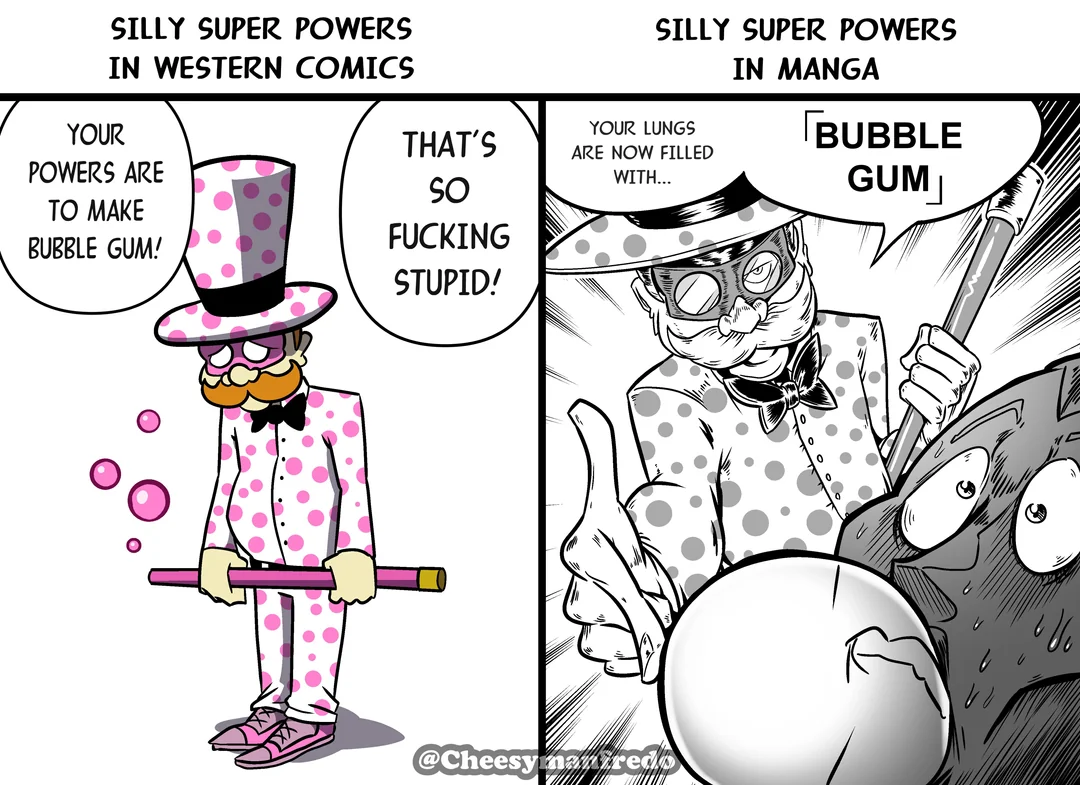
Looking at the limits on “useless superpowers” is a good reference point, in my opinion. There’s probably places on the internet that have those, and I’m sure you can find a way to add some element or situation where they’d be cool.
Bubble Girl, from My Hero Academia
Generally the limiting elements could be something like these (this is a non-exhuastive list, of course):
- Power ceiling (how powerful can it be at max?)
- Range of control (can you use it at a weaker strength than the max? How much weaker?)
- Consequences (What does the power do that can hurt you in return?)
- Physical range (how close/far must you be? Can be combined with range of control)
- Required preparation (do you need to have something ready? This one is more magically themed imo)
- Focus requirements (how much attention do you need to dedicate to using the power? Can you do other things while using it?)
- Mitigtion methods (Can a material be immune to your power? How easily is it available?)
Honestly I usually just mix and match these in my head with a base power until I find something interesting! Usually people will figure out some horrifying loophole, so as long as you can see it barely being useful, you’re probably on the right track.